
Alaska cruise planning often starts with one simple question: “Which cruise line should we choose?”
That question matters, of course. But for Alaska, it usually is not the first question.
The better starting point is:
What kind of Alaska trip do you actually want?
Alaska is one of those trips that lives on a lot of bucket lists for years before anyone actually starts planning it. Glaciers, wildlife, national parks, mountain lodges, historic rail routes, small coastal communities, flightseeing, whale watching, fishing, kayaking, and some of the most dramatic scenery in North America can all fit under the word “Alaska.”
But that is also the challenge.
Alaska is not one vacation. It is a collection of very different travel styles, each with its own tradeoffs.
Alaska Cruise Planning Is Summer-Heavy
For most travelers, Alaska planning centers on the May through September travel season. That is when the broadest mix of cruises, tours, rail options, lodges, excursions, and visitor services tends to operate.
Within that window, the experience can still vary quite a bit. July and August are popular for good reason, with long days, broad availability, and strong demand. May, early June, and September can be attractive for travelers who want fewer crowds or better value, but shoulder-season trips can come with more caveats around weather, excursions, wildlife timing, lodging, and operator schedules.
That is one reason planning early matters. Alaska is not the kind of trip where every good option remains wide open forever, especially if you want a specific ship, cabin type, land extension, rail segment, lodge, or high-demand excursion.
The First Decision: Cruise, Land, Or Both
Many first-time Alaska travelers picture a cruise, and cruising is a wonderful way to see Southeast Alaska. It lets you unpack once, visit several communities, and enjoy scenic cruising days without having to manage every transfer yourself.
But a cruise-only itinerary is just one version of Alaska.
Some travelers want a round-trip Inside Passage cruise from Seattle or Vancouver. Others want a one-way cruise that connects with Southcentral Alaska through places such as Seward or Whittier. Some want a cruise-tour that adds Denali, Talkeetna, Fairbanks, Anchorage, or rail travel before or after the ship. Others may be better served by a land-only trip built around national parks, the Alaska Railroad, fishing lodges, bear viewing, or road-based exploration.
None of these choices is automatically better. They simply answer different dreams.
A traveler who wants a relaxing, scenic, low-logistics trip may love a classic cruise. A traveler who wants to stand in the shadow of Denali, ride the train, and spend more time inland may feel shortchanged by cruise-only planning. A traveler who wants quiet wilderness, kayaking, naturalists, and smaller groups may look at small-ship or expedition-style options. A multigenerational family may need a very different pace than an adventurous couple.
The right trip starts by matching the itinerary to the traveler.
Ship Size Matters, But Not In The Simple Way People Think
One of the most common Alaska cruise planning questions is whether a traveler should choose a large ship or a smaller ship.
Large ships can offer more restaurants, entertainment, cabin categories, family amenities, date choices, and familiar cruise comforts. They can also make Alaska feel easier for travelers who want structure, convenience, and a wider range of onboard options.
Smaller ships can offer a more intimate feel, fewer passengers, naturalist-led programming, kayaking or skiff outings, quieter anchorages, and a stronger wilderness emphasis. They may also come with a higher per-day price and fewer big-ship amenities.
The mistake is turning ship size into a simple rule, such as “small ships see the real Alaska” or “big ships cannot go where it matters.” Alaska is more nuanced than that.
For example, Glacier Bay access is not just a ship-size question. It is governed by National Park Service rules, quotas, permits, and specific itinerary permissions. Some large-ship itineraries include Glacier Bay. Some do not. Some smaller ships offer extraordinary Alaska experiences but may focus on different areas entirely.
That is why travelers should compare the actual itinerary, not just the size of the ship.
Glacier Days Are Not All The Same
Many Alaska cruises advertise glaciers, but the glacier day can mean different things depending on the itinerary.
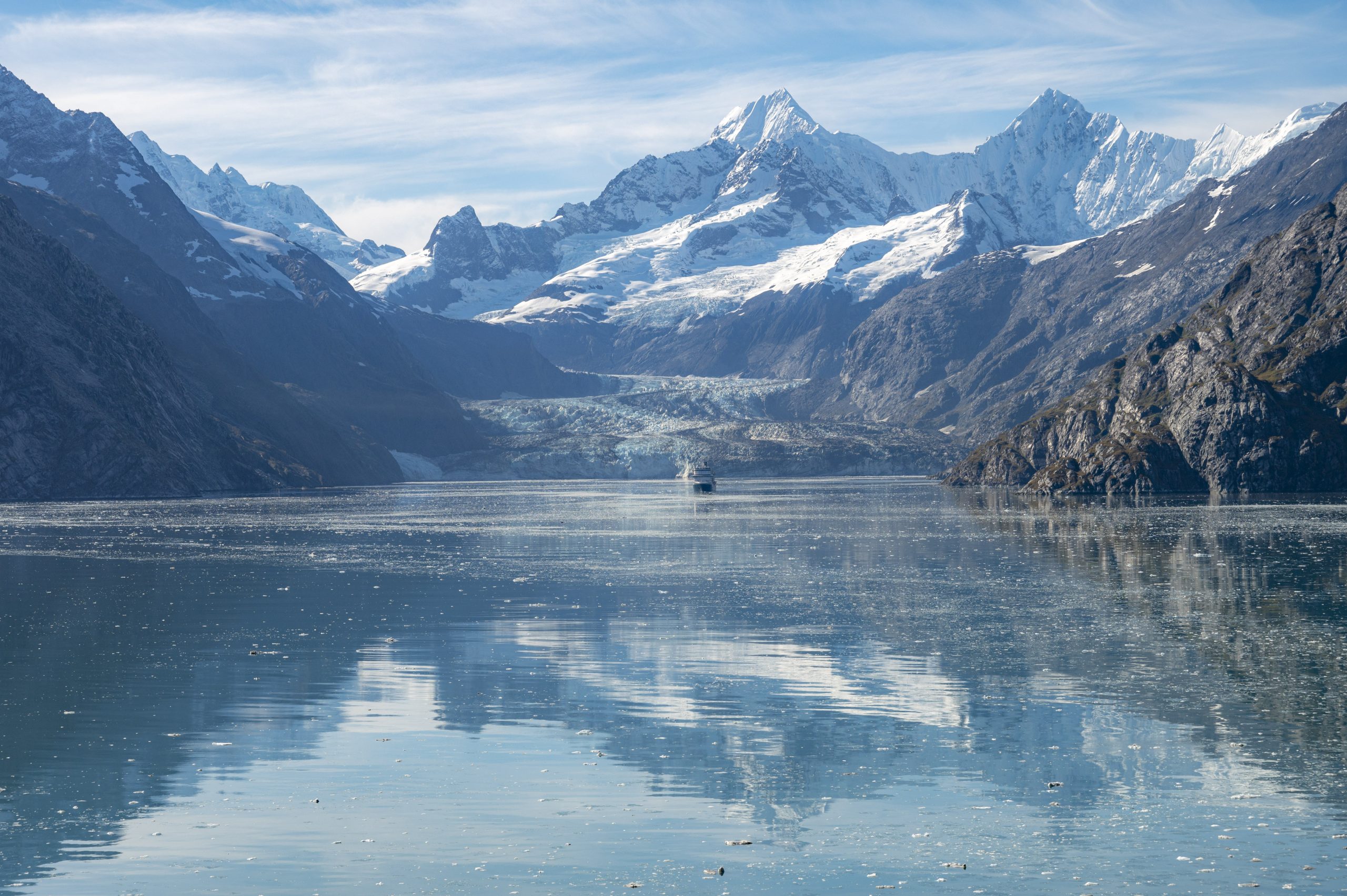
Glacier Bay National Park is a major scenic-cruising experience, with ships spending much of the day in the bay and park rangers typically boarding cruise ships for interpretation. Hubbard Glacier, College Fjord, Endicott Arm, Dawes Glacier, and other scenic areas can each offer a different kind of day.
The point is not that one is always the best choice for every traveler. The point is that a traveler should understand what is actually included.
Is Glacier Bay named on the itinerary? Is the glacier day scenic cruising from the ship? Is there an optional smaller-boat excursion? Is the route dependent on ice, weather, or safety conditions? Are substitutions possible?
Those details matter because for many travelers, the glacier day is one of the emotional centerpieces of the trip.
The Land Portion Can Change The Whole Trip
Adding land to an Alaska cruise can turn a beautiful vacation into a much fuller bucket-list experience.
This is where places like Denali, Talkeetna, Anchorage, Fairbanks, Seward, Kenai Fjords, and the Alaska Railroad come into the picture. A land extension can add mountain scenery, wildlife viewing, national parks, rail travel, lodges, flightseeing, and a deeper sense of Alaska beyond the ports.
It also adds complexity.
Rail schedules, hotel availability, motorcoach transfers, park access, excursion timing, mobility needs, luggage handling, and the pace of travel all have to work together. A land extension can be magical when it is sequenced well. It can feel rushed or exhausting when it is not.
Denali is also a good example of why current information matters. In recent years, access inside Denali National Park has been affected by the Pretty Rocks Landslide and related road limitations. Future-season access should be verified before travelers make assumptions about how far buses will go or what a particular tour will include.
Alaska rewards good planning, but it does not reward guessing.
Excursions Can Define The Trip
For many travelers, Alaska is built around a few “must not miss” moments.
That might be whale watching in Juneau, the White Pass rail experience from Skagway, a Kenai Fjords wildlife cruise from Seward, salmon fishing, dog sledding, bear viewing, kayaking near glaciers, a helicopter glacier landing, or a flightseeing tour near Denali.
These experiences are not just add-ons. Sometimes they are the reason for the trip.
They can also be expensive, weather-dependent, physically demanding, limited in capacity, or tied to very specific ports and timing. A traveler who waits too long may find that the perfect excursion is sold out or that the itinerary they chose does not support the experience they had in mind.
If your itinerary includes Canada, Vancouver, or other international travel considerations, check your documents early. Our guide on whether a passport is required for cruise travel can help you think through that part of the planning before the trip gets close.
That is another reason Alaska planning should begin with priorities, not just price.
Why A Travel Advisor Helps With Alaska
Alaska is not hard because there is too little information. It is hard because there is too much.
A traveler can open ten browser tabs and quickly find ten different versions of the perfect Alaska trip. Cruise-only. Cruise-tour. One-way. Round-trip. Large ship. Small ship. Rail. Rental car. Denali. Kenai Fjords. Glacier Bay. Hubbard Glacier. Luxury lodge. Family-friendly ship. Expedition yacht. Shoulder season. Peak season.
The real work is not collecting options. It is sorting them.
A good travel advisor helps turn the dream into a trip that actually fits. That means asking the right questions:
- What do you most want to see?
- How much time do you have?
- Do you want the ease of a cruise, the depth of land travel, or both?
- How active do you want to be?
- Is Glacier Bay important to you?
- Is Denali worth adding, given the season and current access?
- Are you comfortable with smaller ships, or do you want more onboard amenities?
- Which excursions are worth building the trip around?
- What is your budget, and where should that money matter most?
That kind of guidance is especially valuable for a bucket-list trip. Alaska can be too meaningful, too seasonal, and too expensive to assemble from random tabs and hope everything lines up.
Start Early, Then Plan Thoughtfully
If Alaska is on your mind for next year, now is a smart time to start the conversation.
You do not have to know exactly which ship, rail route, lodge, or excursion you want yet. In fact, that is the point. The best first step is not locking into a brand or itinerary too early. The best first step is understanding what version of Alaska will feel right for you.
Once that is clear, the rest of the choices become much easier.
Alaska is a bucket-list trip. It deserves more than a quick booking. It deserves a plan.
Visit www.abalancedlifetravel.com to get started, or message us for personal planning.
352-444-1320
Helpful Official Resources
If you are starting to explore Alaska, these public resources can help you understand the major routes, parks, and seasonal planning considerations:
- Travel Alaska / Official State Vacation Information
- Travel Alaska: Getting to & Around Alaska by Cruise
- National Park Service: Glacier Bay Cruise Ships
- National Park Service: Denali Current Conditions
These are good starting points, but they are not a substitute for matching the itinerary to your timing, budget, mobility, pace, and must-see experiences.
Leave a Reply